
Is a Rhodesian Ridgeback Right for You?
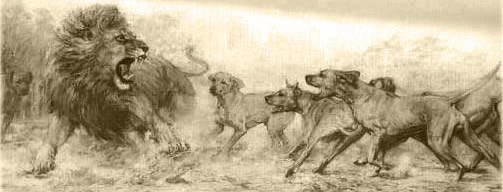
Many times people see a breed of dog and fall in love with its looks, never considering that that breed may be totally unsuitable for their lifestyle, their facilities or their ability to train and control it. All they know is they’ve got to have one! Buying a dog on impulse is always a bad idea! As with buying anything, YOU must educate yourself first: find out what the breed is truly like, visit in the home of several people who have that breed and find out what problems they have encountered. Learn to ask the correct questions, not only about the positive aspects of a breed but the negative, too. And learn what questions to ask of the litter owners...think of it as finding out what the "warranty" covers and the "features" of the item.
Ridgebacks are not Labradors or Golden Retrievers in short coats. They are hunting dogs and have a high prey drive. Translation: They are quite independent -- they don’t fawn over your every word, they can be oblivious to being called and require a lot of positive motivation to train them in traditional obedience. Many people just aren't prepared for the willful disobedience and hard-headedness in this breed.
Any dog ownership requires responsibility. Dogs are not something to decorate your home or yard, they are living, feeling creatures who should be treated as members of your family. This is especially true of Ridgebacks. They must be made to feel as part of your "pack", i.e., your family, or they will strike out on their own. You should think of them as a new addition to your family and plan for them as you would a new child.
PLANNING FOR YOUR RIDGEBACK IS ESSENTIAL
Dogs, especially puppies, will make a big demand on your time. It takes time to properly feed, train and play with a new puppy. Just like babies, young puppies are not able to make it through the night and you will have to get up and take them out. If you work, a new pup might require that you come home at lunchtime to let them out or hire a noon time helper to assist you.
Ridgebacks need plenty of exercise to stay happy and healthy. You'll need to set aside playtime and time for training. Young puppies need a lot of socialization to be good companions. A weekly obedience training class and daily practice is a must for your Ridgeback to become a welcome member of the community!
If this seems like too much for you and your family's schedule, then perhaps this is not the right time to get a Ridgeback.
YOUR RIDGEBACK WILL NEED PROTECTION
Ridgebacks naturally want to hunt and have no sense of cars or yard when they go after a squirrel, rabbit or cat. A fenced yard is important for your dog's safety. Once a Ridgeback starts after a squirrel or rabbit, nothing short of a six foot wall or fence may stop them. Dogs allowed to roam are in danger from becoming lost, of being hit by a car or being poisoned. Your certainly don't want your dog to run away or get lost or killed. It's also good idea to have your Ridgeback wear an identification tag or, better yet, to have your dog permanently identified with a tattoo or microchip just in case he manages to get loose despite your efforts. And, of course, when he leaves the yard he'll need a leash.
Your Ridgeback must have adequate shelter if he is outdoors while you are away. Shelters must be cool in the summer and warm in the winter.
RIDGEBACKS GROW TO BE BIG DOGS
Puppies don't stay little for long! When looking for any breed you need to consider one that suits your environment and lifestyle. Take the time to research a breed you are interested in....visit in the homes of breeders or individuals who own that breed. Ridgebacks may be appealing to you in a physical sense, but they may not have the temperament suitable to your lifestyle. For example: Ridgebacks at play are very energetic -- they need lots of space, can knock down children and adults when they are roughhousing. If you live in the city, you will need to first locate a dog park or area where your Ridgeback can safely run and exercise...a tired puppy is a good puppy!
It's those people who buy on impulse who most often find they can't live with Ridgeback and decide the dog has to go...this is not fair to the dog! Often it’s these irresponsible owners who further burden rescue with having to take in the dog and rehabilitate it.
Again, take the time to read up on the Ridgeback, talk with several knowledgeable owners, check the Internet and try to visit in the home of several breeders. Try to go to some shows and talk with exhibitors, but most of all observe, observe, observe!
MONEY CONCERNS
The initial price of a dog is of concern to some, but it’s the lifelong cost that they sometimes forget. In some communities, dogs need a license. Failure to comply with local laws may result in fines or penalties and may endanger your right to keep your dog!
In addition to the purchase price of your dog, you must plan for food, grooming, collars, a leash, some toys and a special bed. Add in vet care and those training lessons!
All dogs need annual vaccination, heartworm medication, and...just like humans...regular checkups. Sometimes, dogs require flea and tick treatments or expensive treatments for unexpected ailments or illnesses. Ask yourself if you can afford a dog.
WHAT ARE THE GOOD POINTS OF RIDGEBACKS?
1. Ridgebacks have a short coat, don't shed much and are practically odor free -- great for hot climates.
2. They are quite discriminating in who or what they bark at...you should ALWAYS go check it out.
3. They are not fussy eaters and have virtually "cast-iron" digestive systems.
4. They love living with people and are generally quiet in the house.
5. Ridgebacks are intelligent and want to please their owner.
6. Ridgebacks are easily house-trained.
7. And, of course, they are the most handsome of dogs!
